
Could your morning spoonful of honey be doing much more than simply sweetening your porridge? While many of us reach for a jar to soothe a winter cough, there is a quiet revolution happening in the meadows of the United Kingdom that transforms this kitchen staple into a potent wellness tool. You might feel a lingering sense of frustration when faced with vague supermarket labels that offer no traceability, or perhaps you're weary of the seasonal struggle with hay fever and seek a more natural path to relief.
In this article, we'll explore the remarkable wildflower honey health benefits that arise from the complex, polyfloral nectar of our native flora. You will discover how the journey from a diverse British hedgerow to your table creates a nutritionally superior, raw product that supports your immune system and daily vitality. We'll show you how to use this golden alchemy for specific wellness goals and how to find a trustworthy source for authentic, small-batch honey that honours the heritage of British beekeeping. By moving from mass-produced blends to artisanal jars, you can embrace a lifestyle that celebrates both your health and the preservation of our local landscapes.
Key Takeaways
- Understand why the polyfloral nature of wildflower honey offers a broader, more complex spectrum of nutrients than standard single-source varieties.
- Discover how the potent antioxidants and antibacterial properties found in British meadow nectar can bolster your daily wellness and immune response.
- Learn to distinguish between raw and pasteurised jars to ensure you're consuming the living enzymes vital for achieving the full range of wildflower honey health benefits.
- Gain practical insights into using local honey as a natural, traditional remedy for soothing persistent coughs and managing seasonal hay fever symptoms.
- Find out how to trace your honey back to specific British hives by connecting with independent beekeepers who prioritise the health of our local ecosystems.
What Makes Wildflower Honey a Polyfloral Powerhouse?
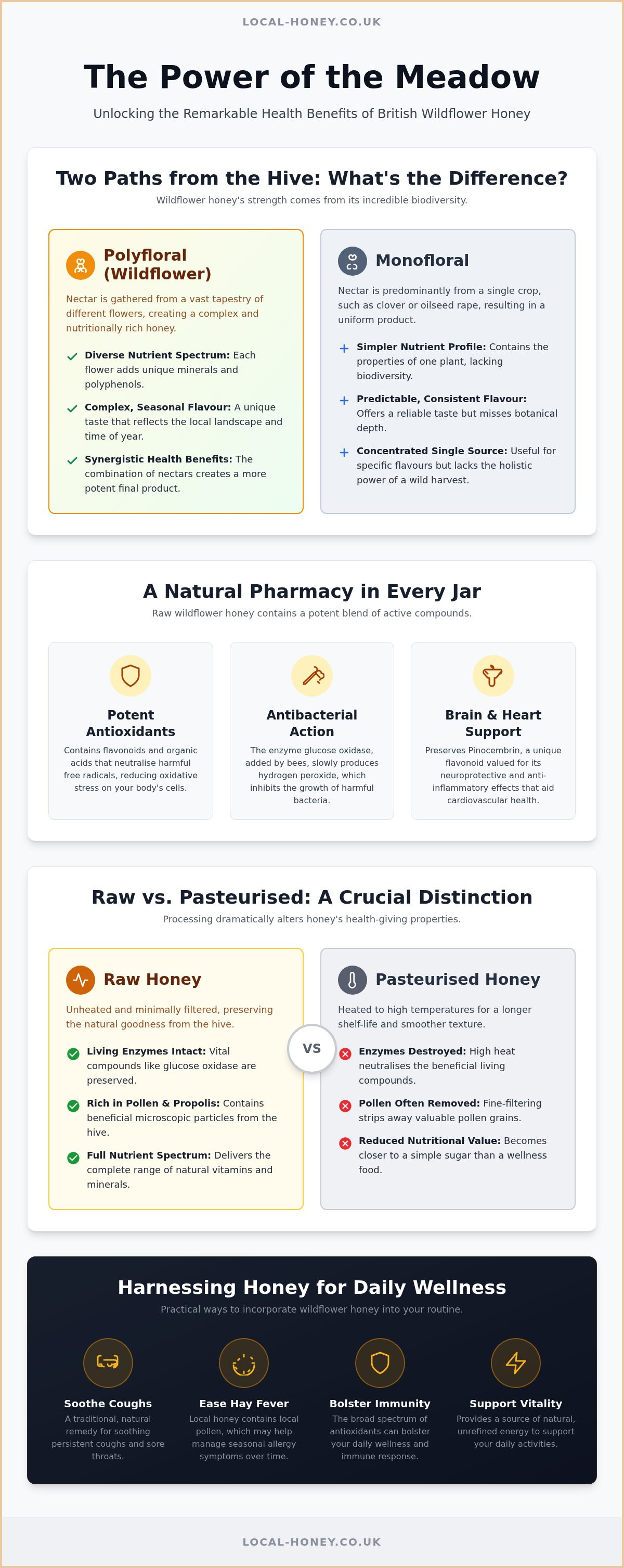
Wildflower honey is a gift of the shifting seasons, often described by the term "polyfloral." This simply means the bees have spent their days gathering nectar from a vast, tapestry-like array of different plant species. This stands in quiet contrast to monofloral honeys, such as oilseed rape or clover, where hives are situated within vast, uniform fields of a single crop. Whilst those single-source varieties offer a predictable sweetness, they often lack the soulful botanical depth found in a wild harvest. Every jar carries a unique seasonal fingerprint that tells the story of the land. A spring harvest might be pale and shimmering, infused with the delicate essence of hawthorn and fruit blossoms, whilst a late summer collection often presents a deeper, more amber profile drawn from brambles and lime trees. This inherent floral biodiversity is the foundation of the wildflower honey health benefits that make it a truly remarkable addition to your daily wellness.
The Complexity of Multi-Floral Nectar
Each flower species acts as a tiny, natural laboratory. Every blossom contributes a unique set of polyphenols, minerals, and enzymes to the hive, creating a complex nutritional profile that single-source honeys cannot match. When bees forage across the ancient hedgerows and sprawling meadows of the British countryside, they curate a nutritional cocktail that reflects the health of the soil and the air. The minerals found in a humble dandelion differ from those in a wild rose; by weaving these threads together, the bees produce something far more potent than the sum of its parts. Polyfloral honey is a living biological record of a specific landscape at a specific moment in time.
Why "Wild" Beats Single-Source Blossom Honey
Choosing "wild" means you are opting for a broader, more resilient nutrient spectrum. In a single-source blossom honey, you receive a concentrated dose of one specific profile, but you miss the synergistic power of variety. When bees are encouraged to choose their own forage, they naturally seek the plants that provide the best sustenance for the colony, resulting in a honey that is naturally robust. It's a beautiful, simple principle that mirrors our own health needs. Just as a varied diet is essential for human vitality, a varied diet for bees creates a more diverse array of nutrients for us to discover. By using the Local Honey directory to find small-scale producers who value these wild spaces, you transition from being a mere consumer to becoming a guardian of British biodiversity. This connection to the land is what truly amplifies the wildflower honey health benefits found in every spoonful.
The Antioxidant and Antibacterial Profile of British Meadows
The nectar gathered from our ancient British meadows is far more than a simple sweetener; it is a complex biological shield. Within every amber drop lies a concentrated collection of organic acids and flavonoids that act as a natural pharmacy. These compounds are essential for neutralising free radicals, the unstable molecules that can cause oxidative stress and damage to our cells over time. By incorporating these diverse botanical elements into your diet, you are providing your body with a broad spectrum of protection that single-source honeys often lack. Traditional British folk medicine has long recognised these wildflower honey health benefits, frequently using raw harvests as a trusted remedy for everything from seasonal vitality to soothing persistent winter ailments.
The secret to this potency lies in the "living" nature of the honey. When bees process nectar, they introduce an enzyme called glucose oxidase. This remarkable addition ensures that the honey maintains a natural antibacterial strength, slowly releasing low levels of hydrogen peroxide that inhibit the growth of harmful bacteria. It's a delicate balance that has been perfected by nature over millennia, providing a level of protection that processed, heat-treated alternatives simply cannot replicate.
Harnessing Polyphenols for Heart and Brain Health
Whilst supermarket alternatives often strip away delicate compounds through high-heat processing, raw wildflower honey preserves a specific flavonoid called pinocembrin. This unique antioxidant is found almost exclusively in honey and bee propolis, and it is highly valued for its neuroprotective qualities. Along with other polyphenols, pinocembrin offers significant anti-inflammatory effects that support the cardiovascular system by helping to maintain healthy blood flow and reducing arterial tension. These nutrients are incredibly sensitive to temperature. If you wish to experience the full range of benefits, it is essential to connect with a local beekeeper who handles their harvest with the patience and respect it deserves, ensuring these fragile compounds remain intact from the hive to your home.
Natural Antibacterial Strength: More Than Just Sugar
It is a common mistake to view honey merely as a form of sugar. In reality, raw wildflower honey is a functional food with a low pH and high osmolarity that naturally discourages bacterial survival. Unlike the "dead" calories found in refined white sugar, raw honey is teeming with minerals like potassium, magnesium, and calcium, which are drawn directly from the British soil through the roots of wildflowers. Darker wildflower varieties often boast an even higher mineral content than lighter blossom honeys, offering a more robust nutritional profile. This makes it a vital, living addition to a balanced lifestyle, serving as a testament to the enduring health of our local ecosystems and the wildflower honey health benefits they provide.
Raw vs Pasteurised: Preserving Nature’s Living Enzymes
The journey from a British meadow to your kitchen table should be one of gentle preservation, yet much of the honey found on supermarket shelves has undergone a harsh industrial transformation. Pasteurisation is a high-heat process, often reaching temperatures of 70°C or more, designed to kill natural yeasts and ensure the honey remains liquid and clear for months. Whilst this creates a product that looks uniform, it effectively destroys the delicate biological compounds that define a true harvest. The most profound wildflower honey health benefits are entirely dependent on the honey remaining raw. When heat is applied, the complex nutritional profile is flattened, leaving behind little more than a simple, sweet syrup devoid of its original vitality.
The Enzyme Gap: What Heat Destroys
Raw honey is teeming with active enzymes that support our own internal health, particularly within the digestive system. Amylase helps our bodies break down complex starches, whilst catalase acts as a powerful antioxidant that protects our cells from oxidative damage. These fragile proteins are the first victims of industrial heating. Once these enzymes are neutralised, the honey loses its status as a functional food and becomes a processed sweetener. Raw honey is a living food that carries the delicate traces of pollen and propolis within its complex, unheated structure. By choosing unpasteurised varieties, you ensure that these "biological catalysts" remain intact, allowing your body to utilise the honey just as nature intended.
How to Spot Truly Raw British Honey
Recognising authentic honey requires a shift in how we perceive quality. Instead of seeking perfect clarity, we should look for the beautiful imperfections of a raw harvest. Truly raw honey is often cloudy, opaque, or even completely solid due to natural crystallisation. This change in texture is a sign of purity, not a defect. If you find a jar of perfectly clear, runny honey in the middle of a British winter, it is a significant red flag that the product has been heavily heat-processed to prevent its natural inclination to set. To ensure you are receiving the full wildflower honey health benefits, follow this simple checklist when reading labels on British jars:
- Look for the words "Raw" or "Unpasteurised" explicitly stated on the packaging.
- Check for a specific UK origin rather than vague "EU and non-EU" blends that often hide poor traceability.
- Ensure the label identifies a specific beekeeper or hive location, confirming a direct link to the landscape.
By favouring these small-batch, artisanal jars, you support the independent beekeepers who act as stewards of our countryside. Their commitment to minimal processing ensures that every spoonful remains a potent, living record of the British summer.
Practical Ways to Harness Wildflower Honey for Wellness
Integrating raw honey into your daily life is an effortless way to access wildflower honey health benefits without resorting to synthetic supplements. Beyond its culinary charm, it serves as a traditional, effective throat soother. The thick, viscous texture coats the lining of the throat, creating a protective barrier that calms the cough reflex. Within the digestive tract, raw honey acts as a prebiotic, providing the necessary nourishment for beneficial gut bacteria to thrive. Even minor skin grazes can benefit from a delicate application; the natural enzymes and low pH support the body's healing process whilst keeping the area clean.
The Hay Fever Connection: Fact vs Fiction
The Hay Fever Theory is rooted in the principle of immunotherapy. By consuming trace amounts of local pollen, you may help your immune system build a tolerance to seasonal irritants. To harness these wildflower honey health benefits, start your daily ritual two months before the British hay fever season begins. Whilst not a total cure, many find it offers significant symptomatic relief, helping to soothe itchy eyes and sneezing during the summer months.
Daily Rituals: Integrating Honey Without Destroying Benefits
Treating raw honey with care is essential for preserving its potency. Avoid adding it to boiling water, as high heat neutralises the delicate enzymes. Instead, wait for your tea to cool slightly. For a nourishing meal, drizzle it over overnight oats or fresh sourdough. Some also find that a small spoonful before bed helps maintain steady glycogen levels, supporting a more restful sleep and preventing the brain from waking you in the night.
To find a harvest that contains the specific pollen from your own corner of the countryside, explore our directory of independent British beekeepers and connect with a producer in your local area.
Finding Authentic, Small-Batch Wildflower Honey in the UK
The true value of a jar of honey lies in its story. When you understand exactly which hives your honey came from, you move beyond being a simple consumer and become part of a centuries-old tradition of British land stewardship. Traceability is the bridge between a generic sweetener and a functional wellness tool. Independent beekeepers across the United Kingdom play a vital role in preserving our remaining wildflower meadows, which serve as the essential lungs of our countryside. By choosing to source your honey directly from these small-scale producers, you ensure that the wildflower honey health benefits discussed throughout this guide are fully realised in every spoonful.
The Truth About "Blended" Supermarket Honey
Walking down a supermarket aisle often reveals jars with vague labels such as "a blend of EU and non-EU honeys." These mass-market products are designed for consistency of colour and price rather than nutritional depth. Under the new honey labelling regulations effective from June 2026, producers must now list countries of origin in descending order, yet a blend still lacks the unique "floral fingerprint" of a single British apiary. These imports often carry a significant carbon footprint, contrasting sharply with the environmental harmony of a local harvest. In 2025, the UK imported £98.9 million worth of honey, whilst exporting only £10.3 million. Opting for a "single apiary" origin means you are receiving a harvest that hasn't been ultra-filtered or mixed with inferior syrups, preserving the nutritional consistency your body craves.
Using the Local Honey Directory to Support Your Health
Finding a trustworthy source shouldn't be a matter of chance. Our directory serves as the definitive resource for connecting you with passionate beekeepers who specialise in raw, unpasteurised wildflower varieties. Buying directly from a producer ensures you receive the freshest possible harvest, often gathered from the very hedgerows and fields you walk past every day. This proximity is crucial; fresher honey typically boasts higher enzyme counts and more potent antibacterial properties. Beyond the product itself, independent beekeepers offer a wealth of expert advice on which seasonal harvests best suit your specific wellness goals. Whether you are looking for a dark, mineral-rich late summer amber or a delicate spring blossom, the right jar is waiting in a hive near you. To begin your journey toward better vitality, explore our national directory to find your nearest wildflower honey producer today and experience the genuine wildflower honey health benefits that only an authentic British harvest can provide.
Embracing the Vitality of the British Meadow
Choosing a jar of wildflower honey is an invitation to bring the soulful diversity of our landscape into your daily life. We've explored how the polyfloral nature of this golden harvest offers a complex nutritional profile that single-source syrups simply can't match. By prioritising raw, unheated varieties, you ensure that the living enzymes and delicate antioxidants remain intact, allowing you to experience the full range of wildflower honey health benefits. Whether you're seeking a natural way to soothe a seasonal cough or simply wish to support your immune system through the changing seasons, the key lies in authenticity and traceability.
Supporting our independent British beekeepers means you aren't just buying a sweetener; you're preserving the heritage of our meadows and ensuring the health of our local ecosystems. Every small-batch jar offers a direct-from-hive connection that mass-produced blends can never replicate. It's time to move away from vague supermarket labels and discover the quiet passion of artisanal craft. Discover the UK’s most authentic wildflower honey producers in our directory and find a harvest that truly resonates with your wellness journey. Let the rhythm of the seasons nurture your health, one spoonful at a time.
Frequently Asked Questions
Is wildflower honey better for you than Manuka honey?
While Manuka honey is famous for its high MGO levels, British wildflower honey offers a much broader spectrum of local antioxidants and minerals. Because it is polyfloral, it contains nutrients from dozens of different plant species rather than just one. It is also a more sustainable choice for UK residents, as it hasn't been shipped across the globe, ensuring the enzymes remain fresh and potent when they reach your table.
Can wildflower honey really help with my hay fever in the UK?
Many people find that consuming local honey provides relief through trace pollen exposure, though it is not a medically proven cure. The theory suggests that by ingesting the specific pollens found in your area, you may help your immune system build a natural tolerance. For the best results, it's widely recommended to start taking a daily spoonful at least two months before the British hay fever season begins in earnest.
Why does my raw wildflower honey turn hard or grainy?
Crystallisation is a natural process and a definitive sign that your honey is raw and high in quality. It occurs when the natural glucose separates from the water, creating a thick, spreadable texture. This change does not mean the honey has gone off; in fact, it proves it hasn't been ultra-filtered or heat-treated. You can easily return it to a liquid state by placing the jar in a bowl of warm water.
Is it safe to give raw wildflower honey to children?
Honey should never be given to infants under 12 months of age. This is due to the risk of infant botulism, as their developing digestive systems cannot yet process certain natural spores found in raw honey. For children over the age of one, it is a fantastic, wholesome alternative to refined sugars. It can be a gentle way to soothe a sore throat or sweeten a healthy breakfast without using processed additives.
Does wildflower honey lose its health benefits if I put it in hot tea?
Yes, excessive heat will neutralise the living enzymes and fragile antioxidants that provide the most significant wildflower honey health benefits. If you enjoy honey in your tea, wait until the liquid has cooled to a comfortable drinking temperature before stirring it in. Adding raw honey to boiling water effectively "cooks" the product, turning a medicinal, functional food into a simple sweetener with far less nutritional value.
What is the difference between wildflower honey and blossom honey?
The term "blossom honey" is a general category for any honey made from flower nectar rather than honeydew, but "wildflower" specifically denotes a polyfloral origin. In the UK, blossom honey is often produced from a single crop like oilseed rape or clover. Wildflower honey is more complex, as the bees have foraged from a diverse mix of hedgerow blossoms, meadow flowers, and ancient woodland plants, resulting in a richer nutrient profile.
How much wildflower honey should I eat per day for health benefits?
Consuming one to two tablespoons daily is usually sufficient to enjoy the wildflower honey health benefits without consuming excess sugar. This moderate amount provides a steady supply of polyphenols and enzymes to support your immune system and gut health. It is best enjoyed raw, perhaps drizzled over morning porridge or spread on wholemeal sourdough, to ensure you are receiving the full vitality of the British summer harvest.
How can I tell if the honey I bought is actually "raw"?
Truly raw honey will usually appear cloudy or opaque, and it will eventually crystallise into a solid or grainy texture. If a jar of honey remains perfectly clear and runny for many months, especially during a cold British winter, it has likely been pasteurised or ultra-filtered. Always check the label for a specific UK apiary address; traceability to an independent beekeeper is the most reliable way to ensure your honey is authentic and unprocessed.


